



Middle Ages
Casamari Abbey
Veroli (FR)
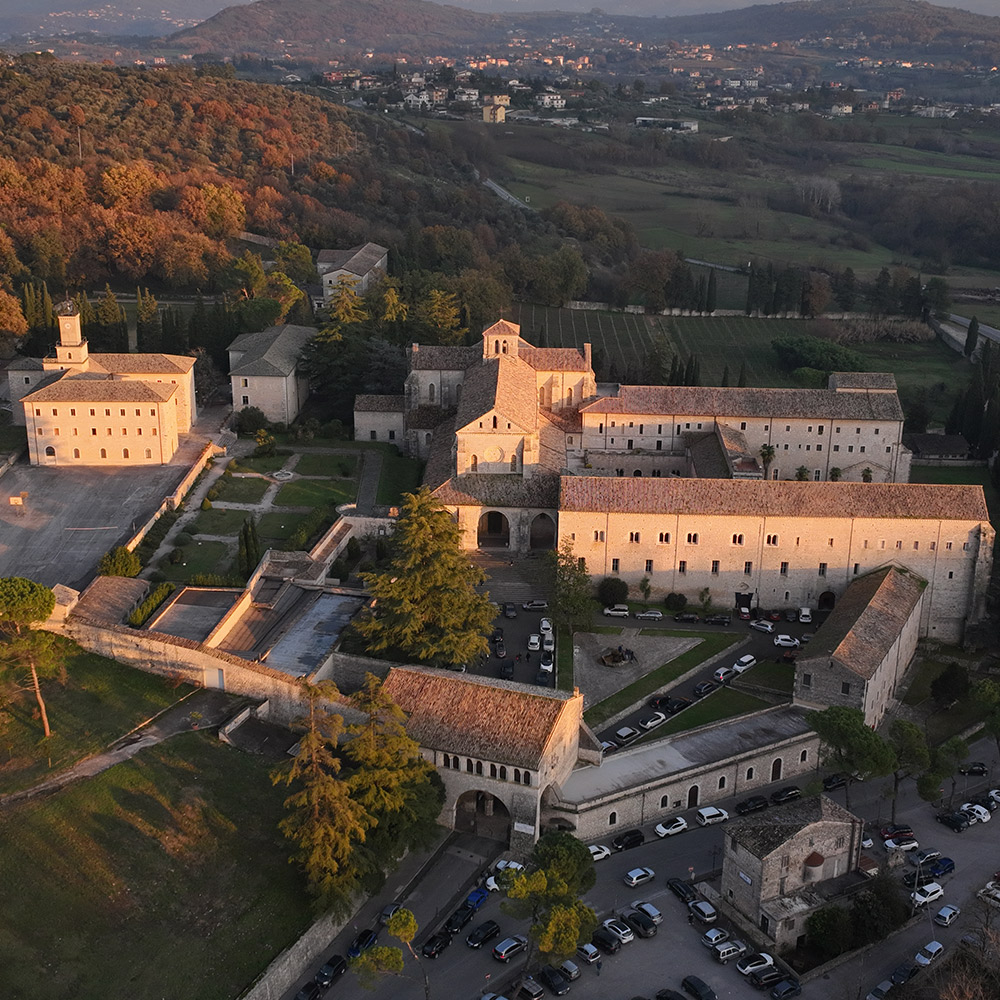
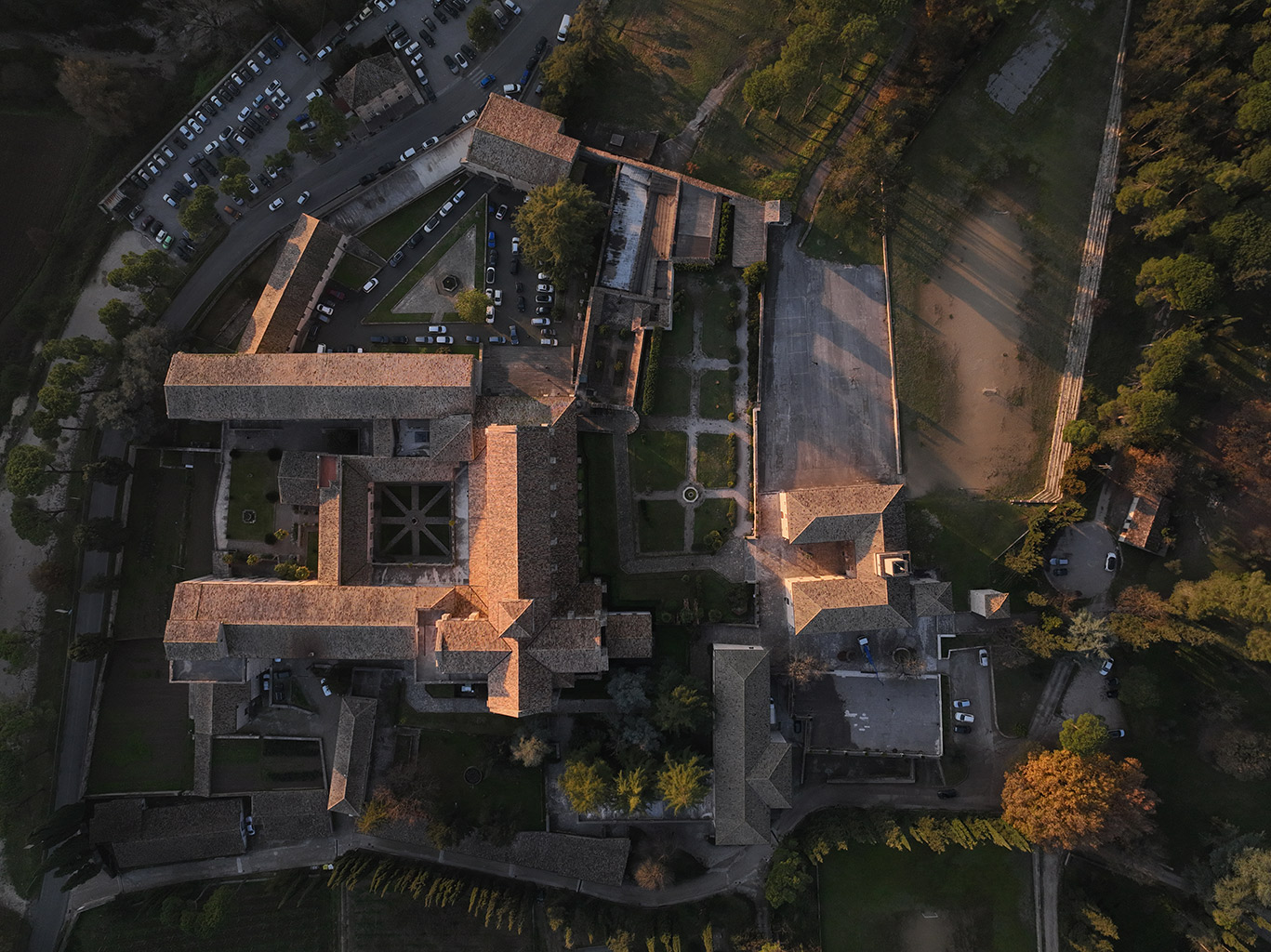
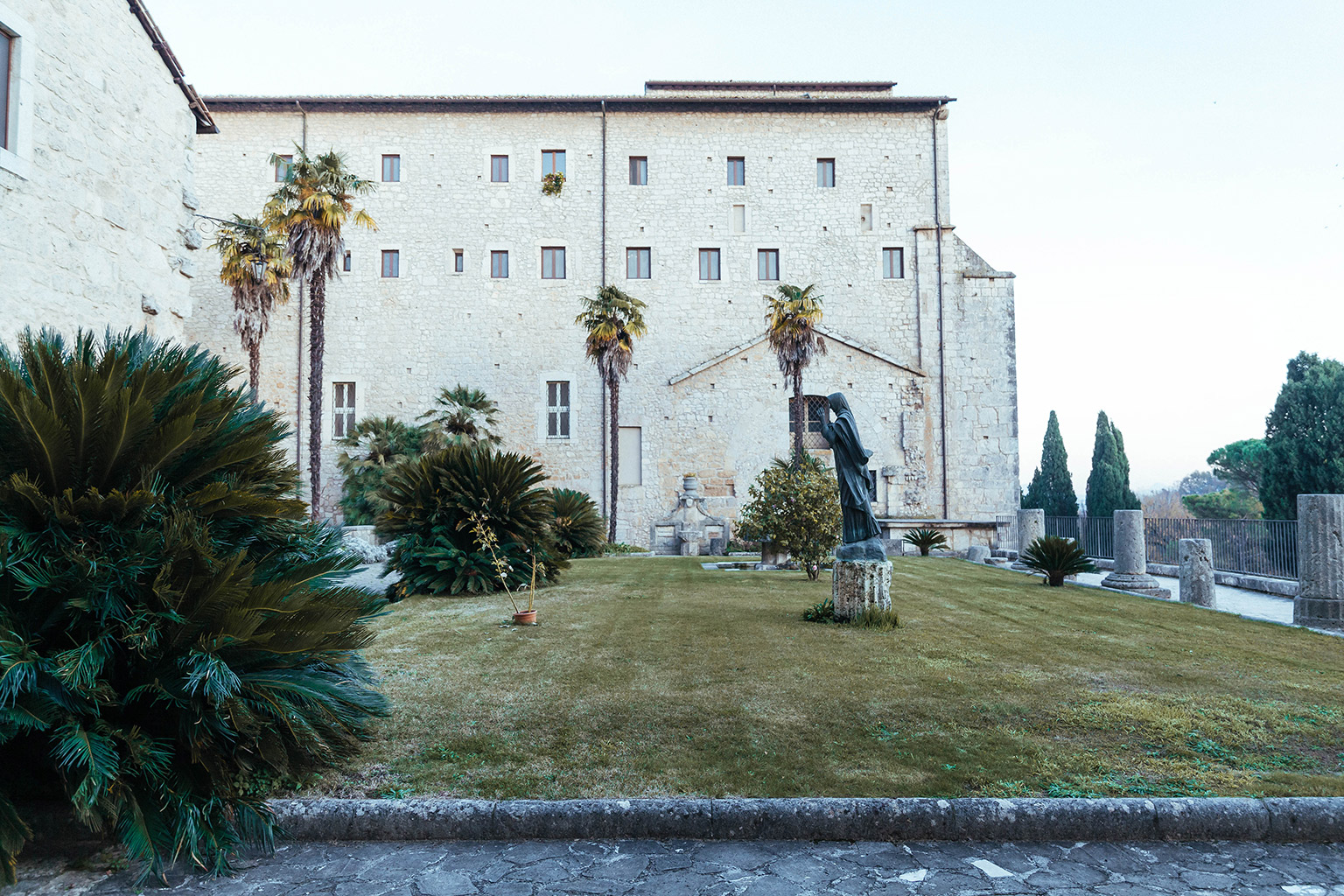
Casamari Abbey is a National Monument owned by the Italian state, which became part of the public domain in 1874 following the promulgation of the so-called post-unification "subversive laws."
Consecrated in 1217, the Cistercian complex of Casamari stands on the ruins of the Roman municipium of Cereatae Marianae, residence of the consul Gaius Marius, from whom the place inherited the toponym Casamari.
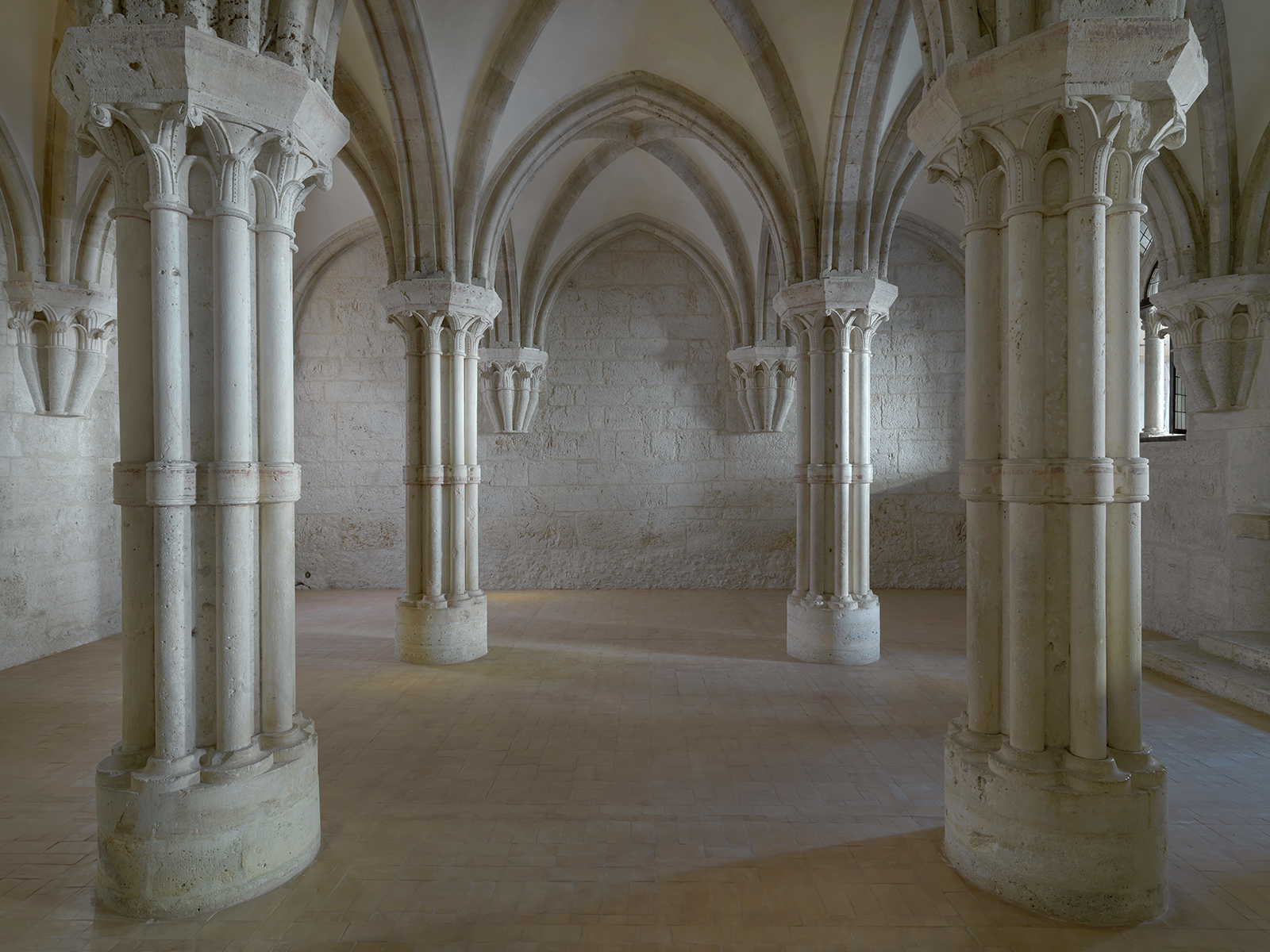
Geometrical rigor and purity of form are fundamental characteristics of Cistercian architecture, which, in keeping with the Benedictine rule renewed by the reforming action of Bernard of Clairvaux, aimed to adapt spaces to the needs of monastic life and to conform them to principles of humility and work. The Casamari complex constitutes an exemplary model of this architectural style, to be interpreted as the manifesto of Cistercian spirituality. The articulation of spaces is conceived on the square module and develops a perfect proportion between plan and elevation.
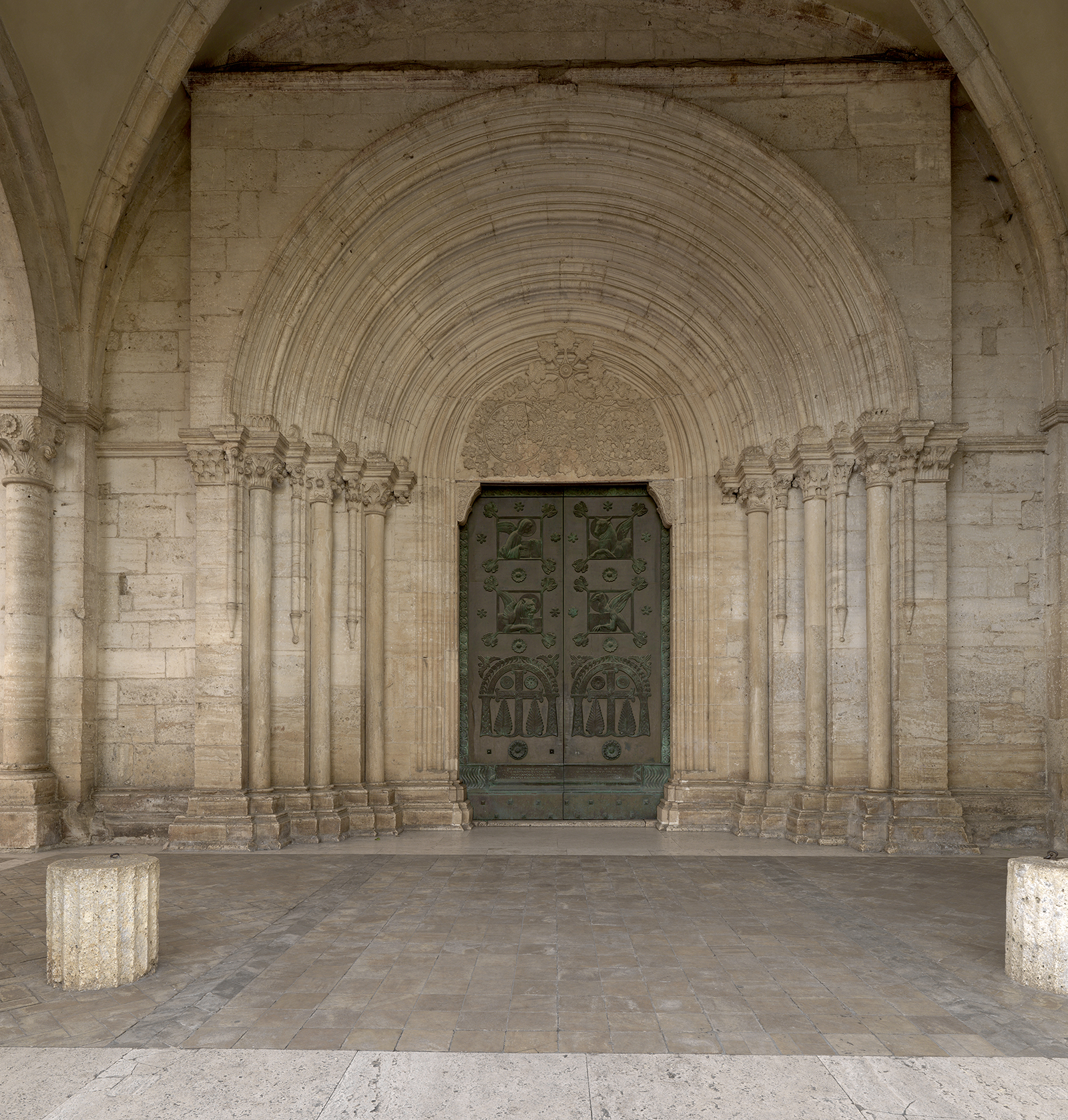
The entrance to the church of Casamari is introduced by a wide flight of steps leading to an atrium with three openings, the central one of which is adorned by a portal with a deep splay with seven concentric bands of arches. The upper part of the facade has a rectangular shape surmounted by a triangle at the center of which is a rose window flanked by two single-lancet windows. The interior of the church is in the shape of a Latin cross, with three naves and the space organized on the square module. The bays of the nave are supported by sturdy cruciform pillars. Originally located in the apse, the high altar is placed at the junction with the transept, below a monumental polychrome marble canopy commissioned by Clement XI (1711). The position of the bell tower, erected at the last bay of the nave, is the only element of the building that diverges from the Cistercian rule, which provided it at the intersection with the transept.
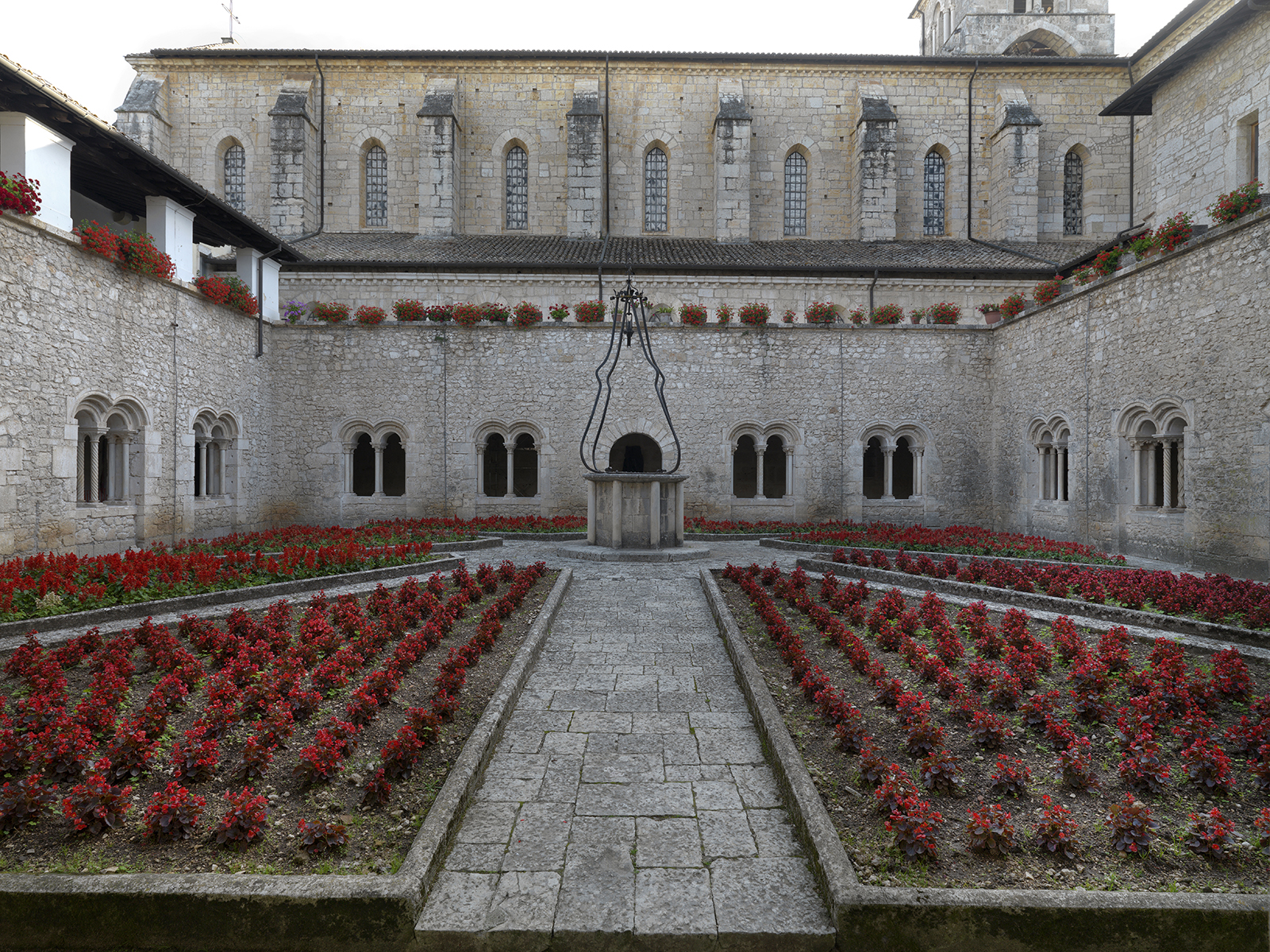
The heart of the abbey is the cloister, a place designated for meditation and the spiritual life of the monks. Square in plan, it has a gallery equipped on each side with an opening in the center and four mullioned windows resting on six small columns of different workmanship. Of particular interest is the central left mullioned window on the south side, where two capitals are adorned with three small heads traditionally identified with the faces of Frederick II, Pier delle Vigne and Abbot John. Around the cloister are organized the spaces reserved for the life of the community: the church, the chapter house and the refectory.
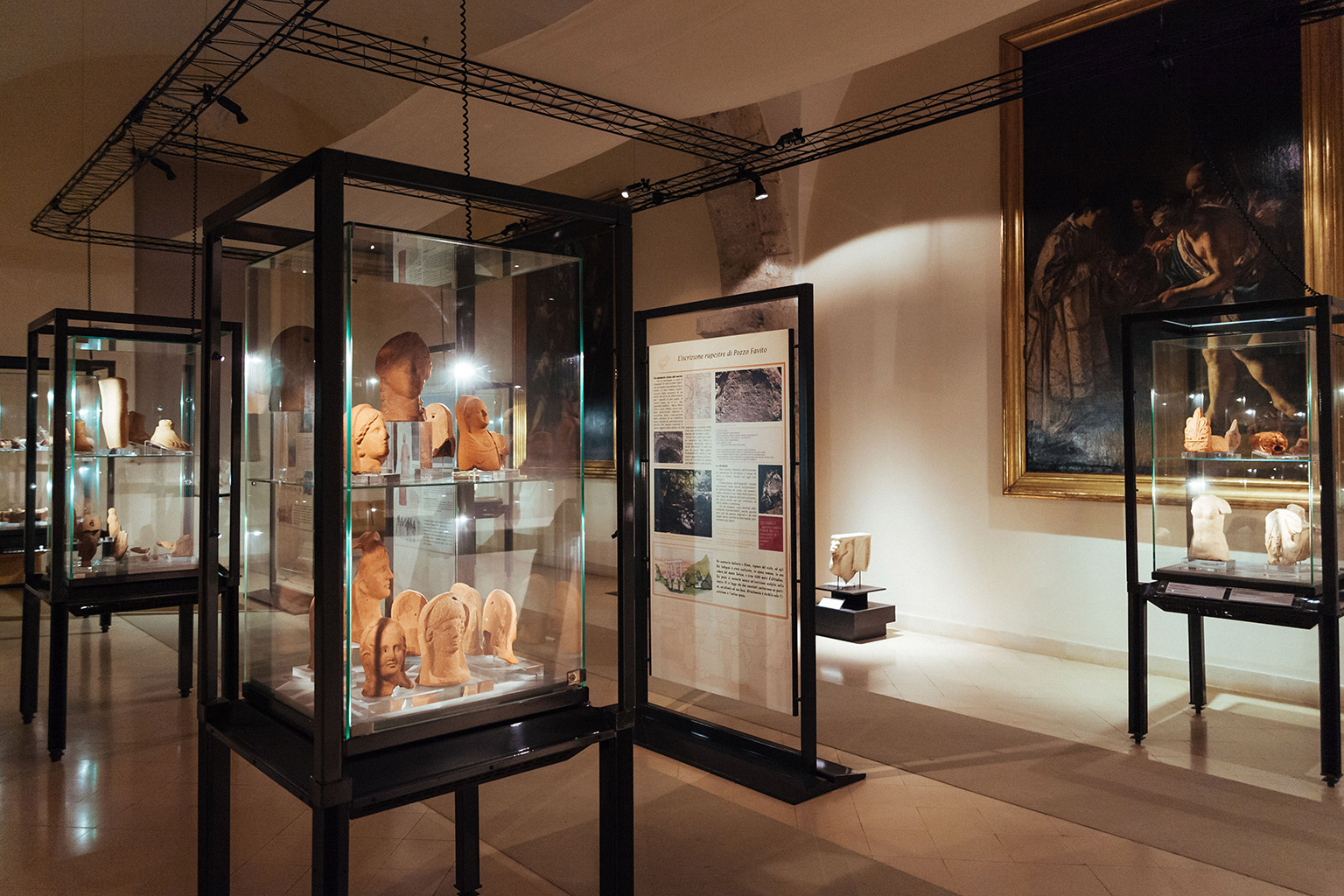
In the spaces originally used as a refectory, the present Abbey Museum was opened in 2003. The archaeological collection is divided into several sections. In the prehistoric one, great importance is represented by the remains of tusks of Elephas antiquus, found in 1923 near the abbey. There are numerous testimonies referable to the Italic peoples, to whom a special section is dedicated. The area of Casamari insisted on an area bordering the territories of the Volscians and the Ernici, and some finds of pottery, amphorae, cups and impasto drew belong to these peoples, with a date between the 8th and 7th centuries BC.
The Roman collection is mostly composed of artifacts found in the abbey area and in the areas towards the Roman bridge where the forum of Cereatae Marianae probably extended, as the finds of marble statues from the imperial period preserved in the Museum seem to indicate. The numerous architectural elements, inscribed slabs, sculptural fragments, and terracotta furnishings are often of unknown provenance, accumulated either in the numerous finds during works during the twentieth century or from excavations in neighboring areas such as that of the votive deposit at Casale Antera of which numerous fictile votive offerings are preserved, attesting to a long devotion of the site reaching back to the Christian era.
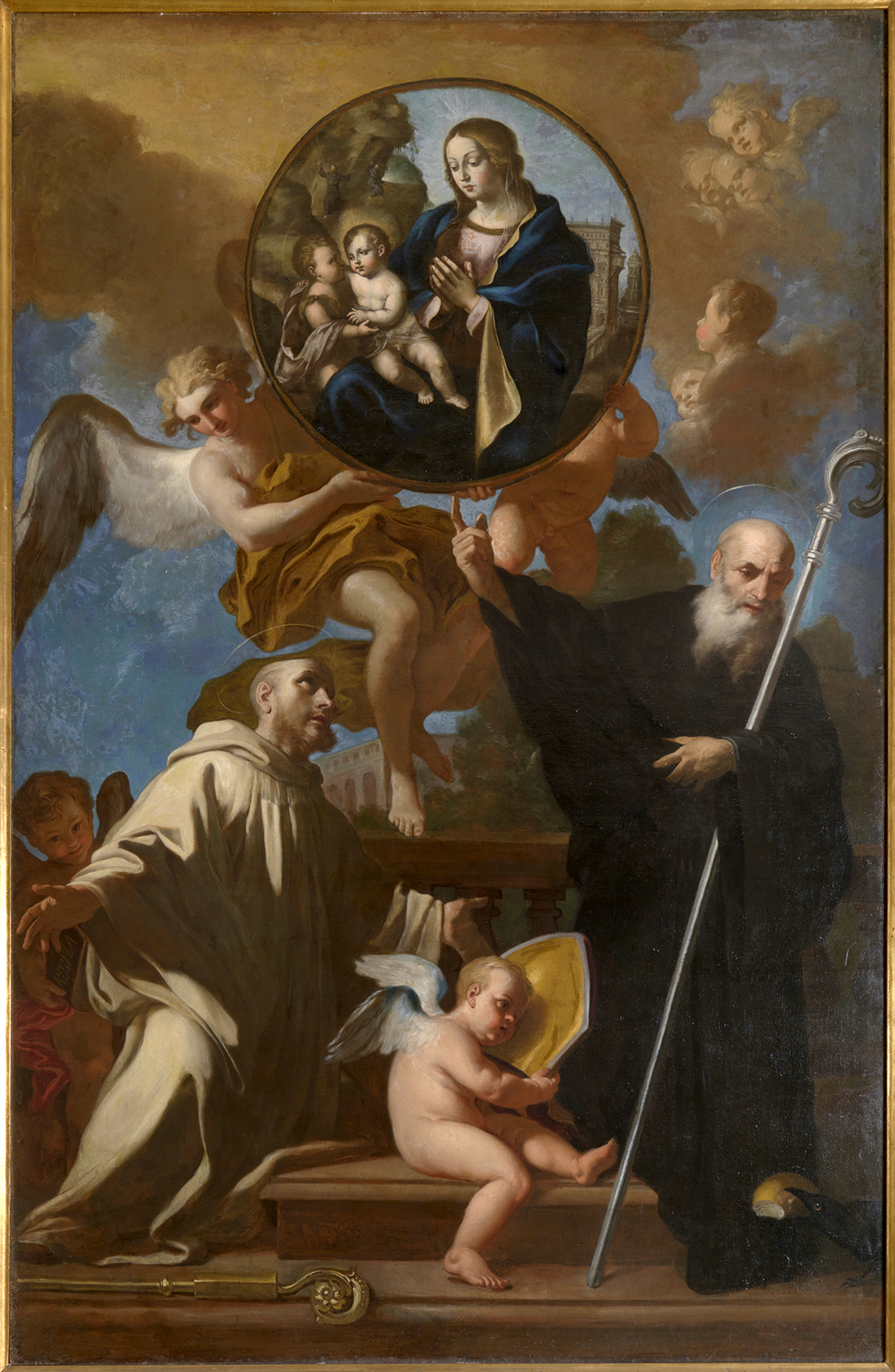
The museum has a remarkable picture gallery consisting of about 90 pieces (most of them in storage) belonging to a chronological span from the 15th to the 19th century, as well as two detached frescoes from the church of Santa Maria del Reggimento, the first settlement of the Casamari community. The original nucleus of the collection consists of works intended for the embellishment of the church and the entire abbey complex, such as the canvases already present since the mid-17th century and the three large altarpieces commissioned in 1721 by Cardinal Annibale Albani and attributed to Onofrio Avellino, a Neapolitan painter and pupil of Francesco Solimena. To this same nucleus belong the three large paintings commissioned in 1769 by Abbot Isidoro Maria Ballandani to Paolo Sperduti from Arpinate. A first proper exhibition organization of the collection is due to Abbot Nivardo Maria Buttarazzi, Dean of the Cistercian Congregation of Casamari from 1941 to 1988.
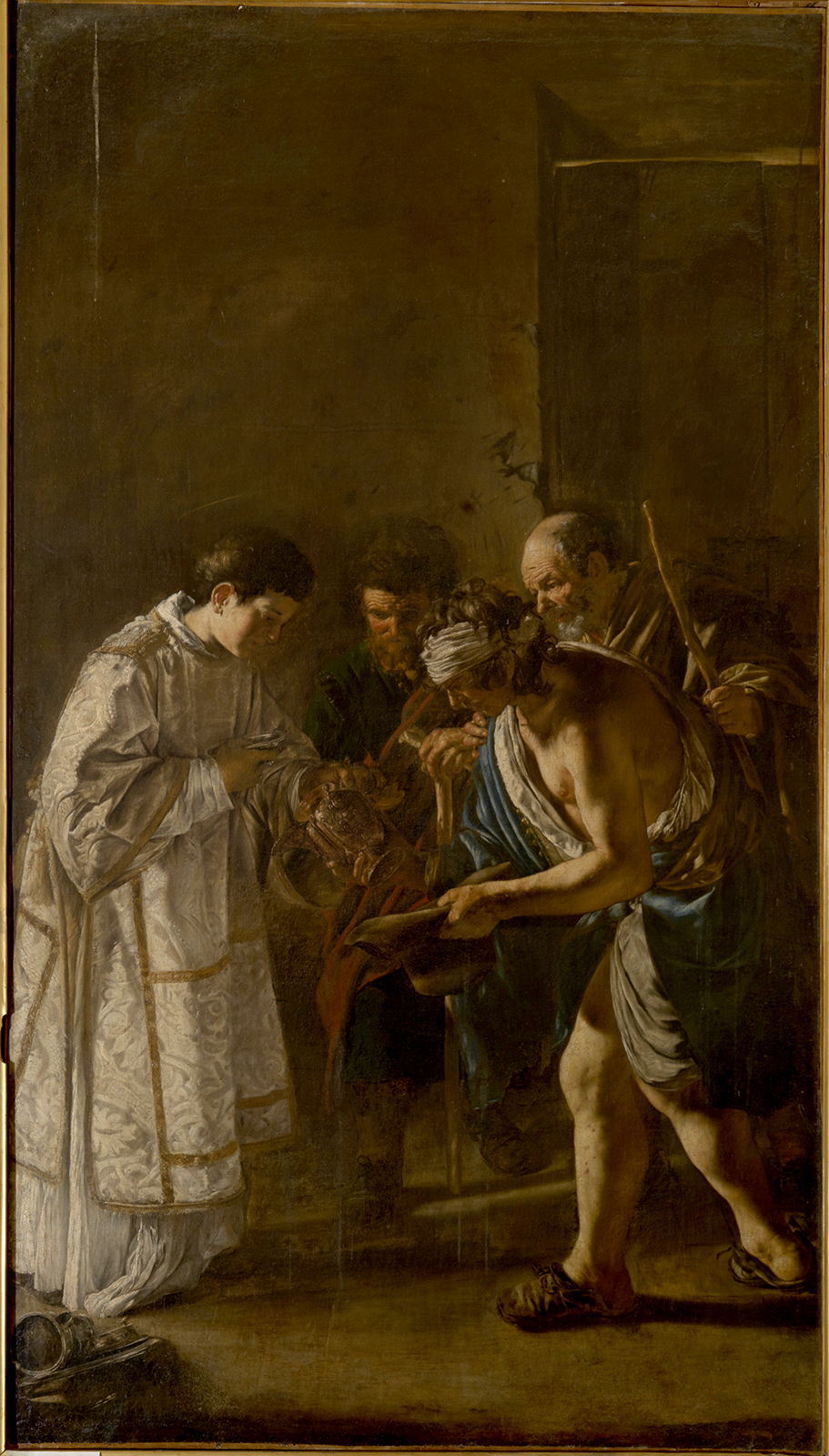
On display in the rooms are seven large paintings, mostly from the seventeenth to eighteenth centuries, including the large altarpiece by Giovanni Serodine, a Caravaggesque artist, depicting theElemosina di san Lorenzo (made for the Roman church of San Lorenzo fuori le mura).
Info
Via Maria, 25, 03029, Veroli (FR), Italy
Opening hours of the Abbey rooms:
9:00 - 12:00, 15:00 - 18:00
The museum is open upon request on site.
Free entrance.
Phone: +39 0775 282371
e-mail: drm-laz.casamari@cultura.gov.it
Facebook
1 h
Photography is allowed.
Site reachable by Cotral bus, stop on request Veroli/Abbey of Casamari
Free parking nearby.
Photo Gallery