



Poet of archaeology. Amedeo Maiuri between Latium and Campania.
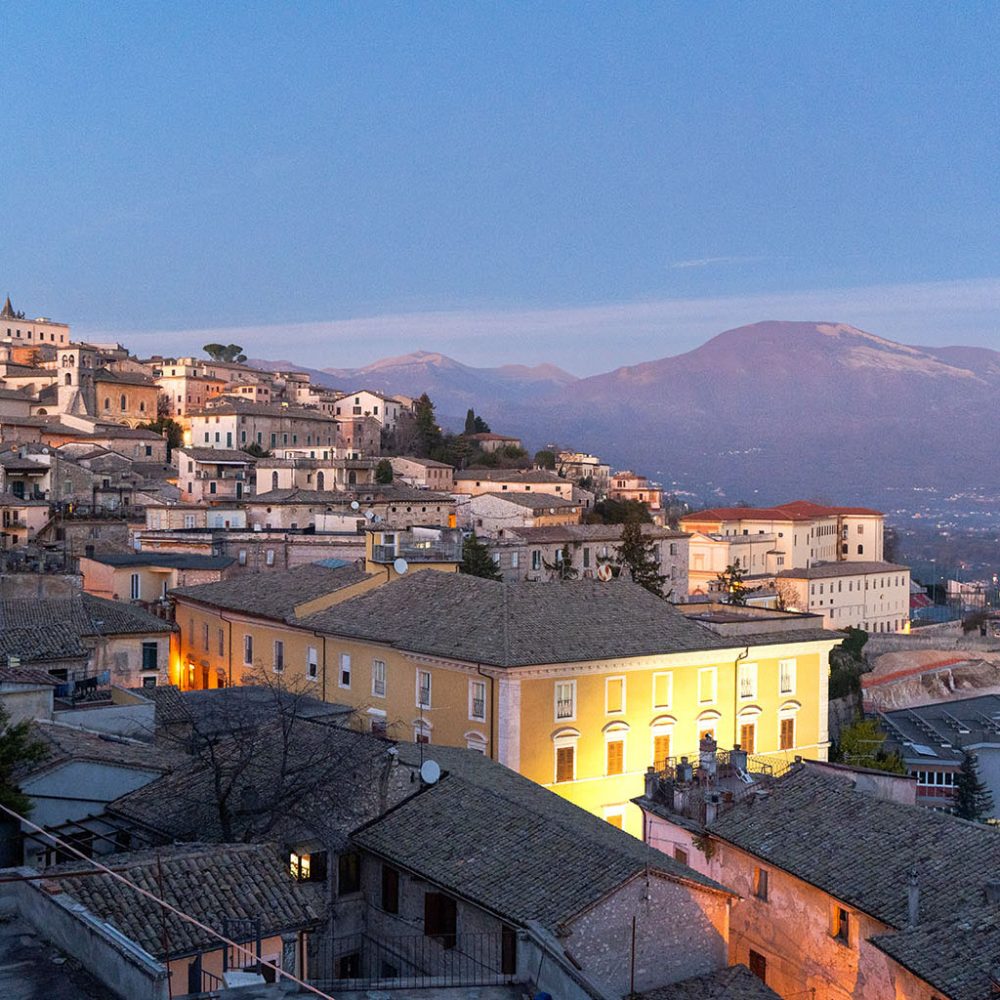
Veroli (FR)
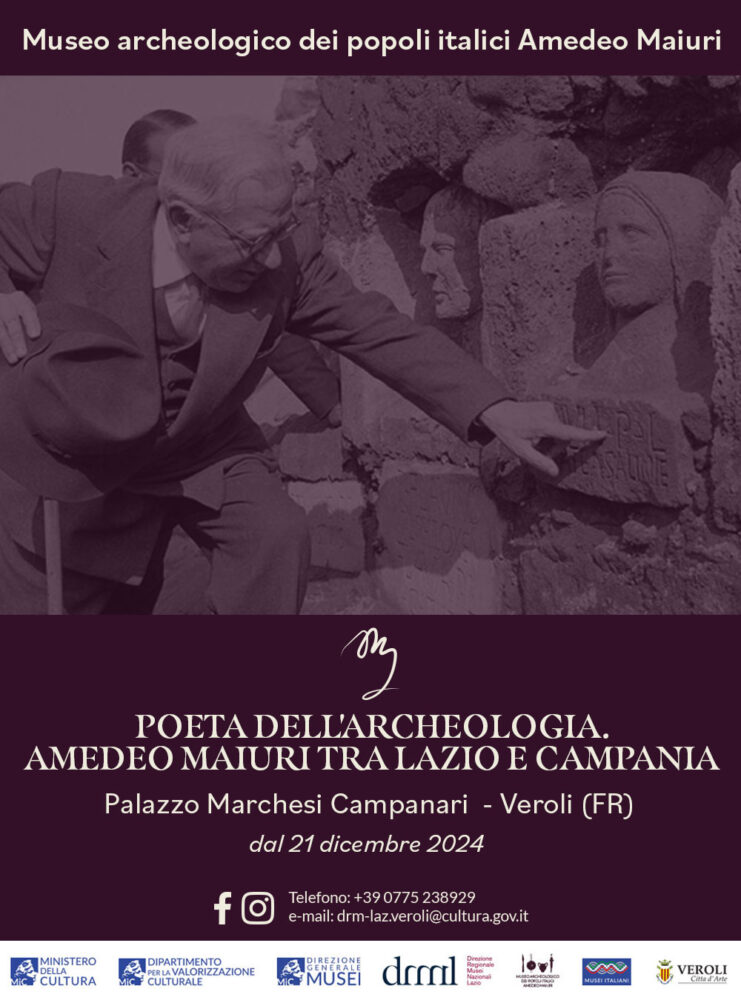
The exhibition section opens to the public on December 21, 2024. Poet of Archaeology. Amedeo Maiuri between Latium and Campania., set up at the Archaeological Museum of Italic Peoples "Amedeo Maiuri" in Veroli (FR) at Palazzo Marchesi Campanari, which, thanks to the virtuous synergy between the Ministry of Culture, the Lazio Region and the Municipality of Veroli, has become a state museum under the Regional Directorate of National Museums Lazio since February 2024.
To the rooms already inaugurated last year, on the ground floor, dedicated to the mosaic of people who lived in the territory between the Ernici mountains, the valleys of the Sacco and Liri rivers, and the Pontine plain, a thematic section dedicated to one of the protagonists of twentieth-century Italian archaeology, Amedeo Maiuri, to whom the town of Veroli itself gave birth in 1886, is now being added.
The exhibition itinerary on the main floor of the Palace focuses on two moments in the scholar's long career, following his appointment as Superintendent of Antiquities of Campania and Molise in 1924: the excavation of the sanctuary of the Italic goddess Marìca at the mouth of the Garigliano River, in the Aurunci territory near Minturno, and the excavations of Pompeii, where Maiuri was active for more than three decades. Original archival documents testify to the care with which the excavation of the important sanctuary of the goddess Marìca was conducted beginning in 1926 by Paolino Mingazzini, an inspecting officer under Superintendent Maiuri. Displayed alongside documents from the period are typical votive offerings to the deity and a terracotta female head antefix that decorated the temple's roof.
The display in the large reception hall on the second floor draws inspiration from the suggestion of a Pompeian interior set up in the 'Maiuri way,' where excavated objects are displayed in the place where they lived, to restore the atmospheres of the daily lives of the men and women of antiquity. The objects of daily use and the marble herma depicting Dionysus come from the excavations of the House of Menander in Pompeii, where the archaeologist worked passionately between 1926 and 1932; the characteristic grave markers (columellae) and the plaster cast copy of a human body come from the area of Porta Nocera, where Amedeo Maiuri excavated from 1952. The 1956 documentary Pompeii. Twenty Centuries Later, signed by Antonello Falqui, one of the first of its kind, testifies to the great care taken to publicize archaeological discoveries.
A selection of photographs by Luigi Spina, dedicated to some Pompeian domus, closes the exhibition in a room adjacent to the reception hall.
The legacy of Maiuri's approach, which contributed to making Italy's cultural heritage accessible to a wide audience by recounting antiquity with poetry and humanity, also lives on today in the museum dedicated to him, through the display of artifacts on loan from the National Archaeological Museum of Naples, the Archaeological Park of Pompeii, and the Pantheon and Castel Sant'Angelo - National Museums Directorate of the city of Rome.
The exhibition thus represents a further milestone in the broader project of the overall arrangement of the "Amedeo Maiuri" Archaeological Museum of Italic Peoples, on which the Ministry of Culture, in agreement with the Municipality of Veroli, is investing significant resources for the enhancement and accessibility of a museum reality with an innovative and pioneering approach.
Opening hours
Friday - Sunday: 10 a.m. - 1 p.m. - 3 p.m. - 6 p.m.
Tuesday - Thursday: by appointment only
+39 0775 238929
December 25 closed; December 31 10 a.m. to 1 p.m.
Free admission.