



Ancient Age
National Archaeological Museum of Civitavecchia
Civitavecchia (RM)
The National Archaeological Museum of Civitavecchia is located in the heart of the city, just a short walk from the port and Fort Michelangelo, inside the 18th-century building commissioned by Pope Clement XIII in the 18th century, as attested by the inscription above the building’s entrance.
Established as a state museum in 1970, it carries on the legacy of the Civic Museum founded in 1918, preserving important archaeological artifacts from the city and the surrounding area, from the Tyrrhenian coast to the Tolfa Mountains.
Following an extensive renovation and complete redesign, the museum now features an exhibition layout that spans all four levels of the building, doubling the space dedicated to exhibits and visitor engagement.
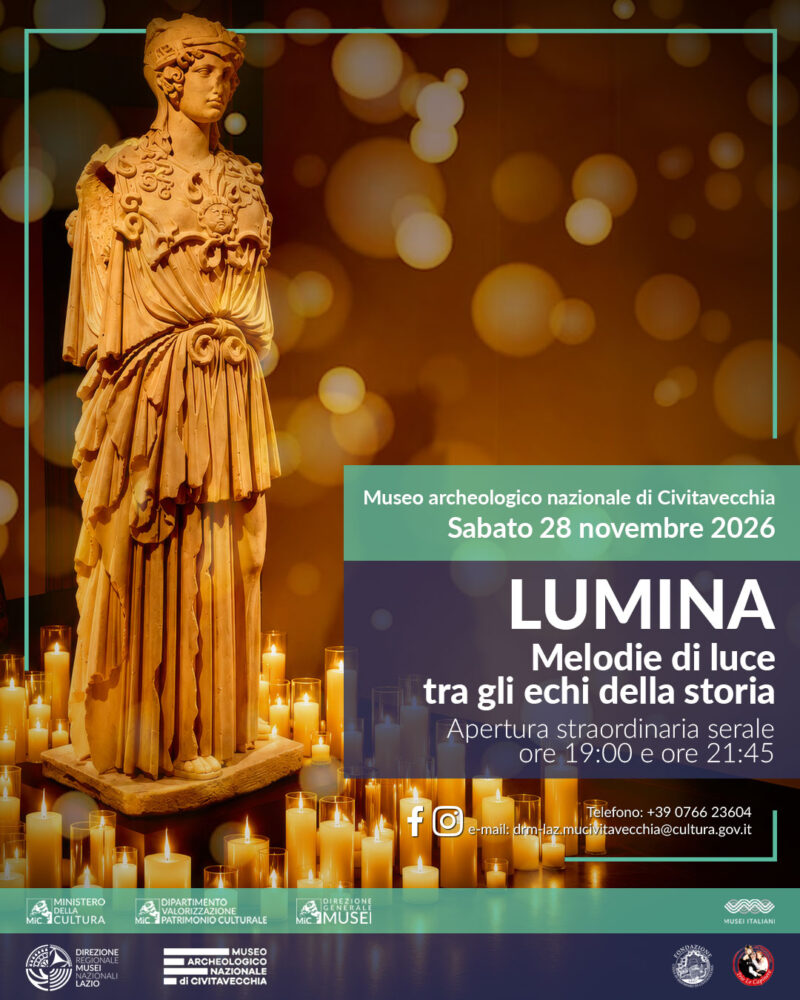
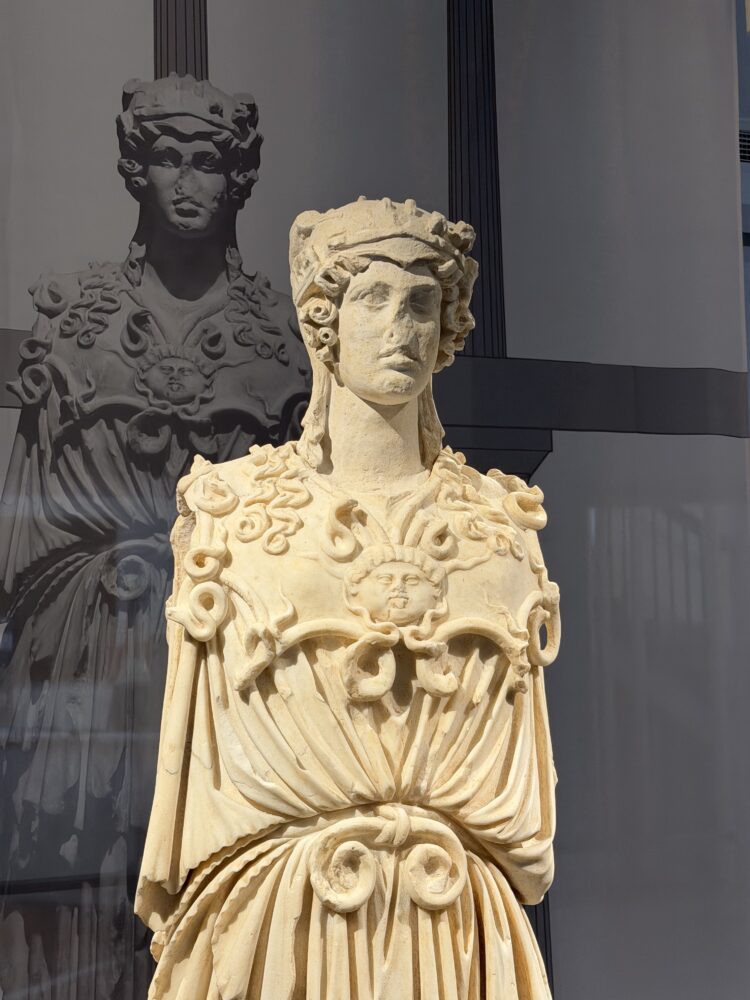
The tour begins on the ground floor with two of the museum’s iconic works: the Roman copy of the Athena Parthenos, inspired by Phidias’s famous masterpiece, and the statue of Apollo-Helios, considered a large-scale reproduction of the Colossus of Rhodes. A dramatic and immersive display enhances the two sculptures through the use of lighting effects and multimedia content.
The first floor explores the region before the Roman conquest, from the earliest prehistoric settlements to Etruscan civilization, with a section dedicated to the Etruscan sanctuary at Punta della Vipera and the cult of the goddess Menerva.
The second floor is dedicated to Centumcellae, the city founded by Emperor Trajan around the large harbor, and illustrates its urban development, maritime and commercial activities, coastal villas, and the Terme Taurine. The tour continues with a section dedicated to Leopoli-Cencelle, the medieval city founded in 854 by order of Pope Leo IV.
The third floor showcases the historical collections and a selection of artifacts long stored in the depositories, including materials from archaeological seizures. The new exhibition design brings items of particular interest back into the spotlight, transforming a storage space into an exhibition environment dedicated to the understanding and preservation of cultural heritage.
Multimedia tools, reconstructions, tactile models, bilingual panels, and content in Italian Sign Language (LIS) help make the exhibition accessible and inclusive.
The Museum thus presents itself as a space for knowledge and storytelling, capable of connecting the artifacts with their places of origin and, through archaeological evidence, recounting the history of the city and its territory.
Info
Largo Cavour, 1, 00053, Civitavecchia (RM)
8.30am to 7.30pm
Monday
January 1, December 25
Full € 3.00
Facilitated € 2.00
Reductions and gratuities as per current regulations: MiC website.
Free admission:
first Sunday of the month, April 25, June 2, November 4
Cumulative Archaeological Museums of Northern Latium: Vulci Archaeological Museum and Abbadia Castle in Canino, National Archaeological Museum in Tuscania, National Etruscan Museum of Rocca Albornoz in Viterbo, National Archaeological Museum of Agro Falisco and Forte Sangallo in Civita Castellana, National Archaeological Museum in Civitavecchia; full price of €15.00; valid 365 days from first admission, one admission for each site.
As of December 16, 2023, e-ticketing service has been active on the "Italian Museums" app, available on the Play Store and App Store.
Telephone: +39 0766 23604
e-mail: drm-laz.mucivitavecchia@cultura.gov.it
Facebook
Instagram
Groups of up to 20 are allowed + guide only with an audio guide (whisper).
1 h
The museum lies a short walk away from the entrance to the Port of Civitavecchia, Varco Fortezza (Forte Michelangelo).
Bus: B, C/, COTRAL, NAV.
Train: FL5
Roadside paid parking.
Photo Gallery